When Rubber That Tears Through More Than Tread
We get a call for a semi on the shoulder near the I-94 exit for State Street. The driver said he needed a tire. When we arrived, the tire was gone and so was part of the fender. The rim had grooves in it. The air line to the brake chamber was hanging loose. That truck needed I-94 heavy towing, not a tire swap. This scenario happens all the time.
A blown steer or drive tire on a loaded rig does not just shred rubber. The pieces fly into brake lines, wiring harnesses, fuel tank straps, and suspension mounts. If the truck lost air pressure or cannot steer without metal grinding against metal, changing the tire will not get the driver back on the road. We see this often enough on I-94 heavy towing calls to know the difference between a flat and a failure that broke other parts.
When the Tire Is Not the Only Problem
A clean blowout leaves a flat tire and some debris. The truck still holds air. The brakes still release. The wheel still turns without dragging. A mobile tire service can handle that if the shoulder is wide enough and the ground is stable.
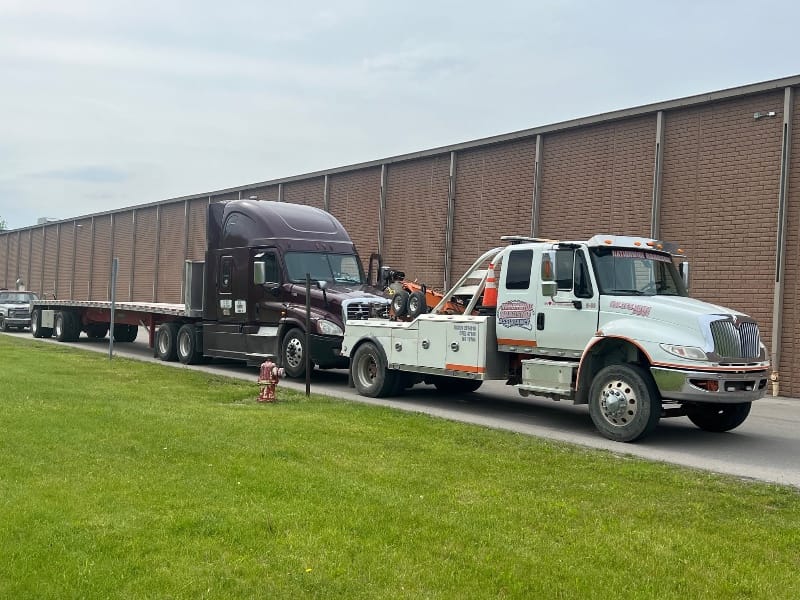
The situation changes when the shoulder is gravel, the truck is leaning toward the ditch, or the blown tire took out a brake line. We have pulled semis off I-94 near Ann Arbor where the steer tire blew and bent the fender into the wheel well. We have seen drive tire failures rip the air fitting off the brake chamber. Once that happens, the tire becomes a smaller issue.
A driver who tries to move a truck with a damaged air system risks locking the brakes, ruining another rim, or creating a fire. The truck may roll a few feet before something else breaks. That is why I-94 heavy towing exists.
Why Road Position Changes the Response
A truck parked fully on a paved shoulder near the Jackson rest area gives us room to set up. A rig leaning into gravel near an entrance ramp or sitting beside 70 mph traffic gives us less. On I-94 heavy towing calls, road position can matter as much as the tire damage itself.
Cargo affects the plan too. A refrigerated trailer with a tight delivery window may need to keep moving while the tractor goes to a shop. A hazmat load or sealed trailer may require the whole combination to move together. An empty flatbed gives us more flexibility than a loaded tanker.
Sometimes we move just the tractor. Sometimes we move the full combination. Sometimes we help set up a trailer transfer once the damaged unit is clear of the roadway. The wrong choice can leave a loaded trailer in a bad spot or create a second tow.
The Damage That Keeps Building
A blown tire on a moving semi throws chunks of rubber at 60 mph. Those pieces hit anything in their path. Brake lines, wiring, mudflaps, light brackets, and fuel tank guards all sit close to the tire. A steer tire blowout can bend sheet metal into the wheel. A drive tire failure can tear into the air system or suspension.
If the driver keeps moving after the blowout, the bare rim grinds into the pavement. That ruins the wheel, damages the brake drum, and can create enough heat to start a fire. We have seen rims worn down to half their original thickness after a driver tried to reach the next exit. That kind of damage turns a tire call into a brake job, a rim replacement, and sometimes a hub rebuild.
Nationwide Towing Responds to I-94 Heavy Towing Calls When Tire Damage Goes Beyond the Tire
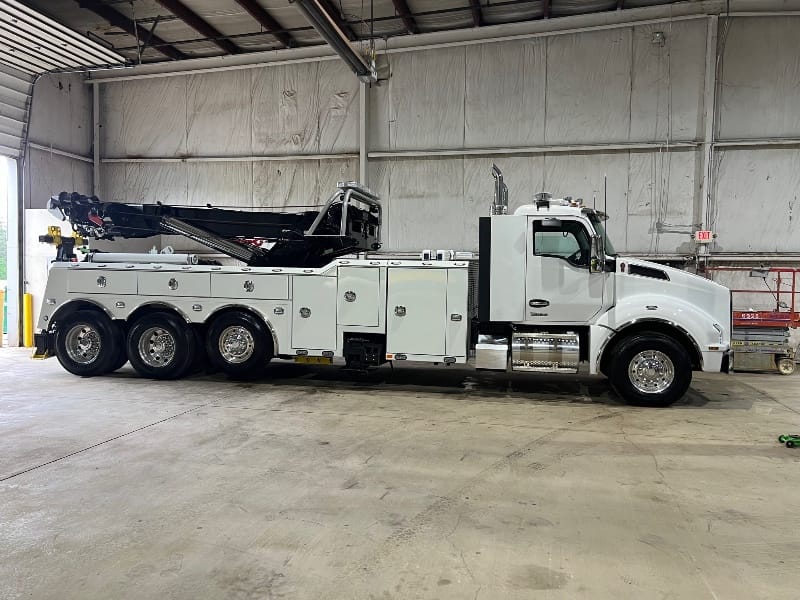
Nationwide Towing started in 2014 and now runs 30 trucks across Southeast Michigan. Our operators know I-94 between Ann Arbor and Ypsilanti Township. We handle I-94 heavy towing calls where the damage goes beyond a flat tire and into the brake system, air lines, suspension, or steering.
When a semi blows a tire and cannot move safely, our dispatchers ask about air pressure, brake function, cargo, and road position before sending a truck. I-94 heavy towing after a tire failure starts with understanding what else broke and how to get the driver off the shoulder without causing more damage. We see these calls often enough to know that the tire is rarely the only problem.
FAQs
What should a driver do right after a semi tire blowout?
Get as far out of traffic as possible and stop before more damage builds. Turn on flashers, set triangles if conditions allow, and check for visible damage from a safe spot.
Can shredded tire rubber damage brake lines?
Yes. Loose rubber can whip into brake lines, air fittings, wiring, mudflaps, and nearby brackets. If the truck loses air pressure, it should not keep moving.
How do I know if a tire failure needs a tow instead of mobile service?
A tow may be needed if the rim is bent, brakes are damaged, air is leaking, steering feels wrong, or metal is dragging. A narrow shoulder can also make mobile tire service hard to complete.
Why is air pressure so important after a semi tire failure?
Semi brakes depend on air pressure to release and work correctly. A torn air line can leave brakes dragging, locked, or uneven.
Can cargo change how a disabled tractor-trailer is moved?
Yes. A loaded trailer affects weight, balance, and transfer options. Some loads need to stay with the tractor, while others may move with a backup truck.
What details help dispatch send the right truck?
Share the nearest marker, travel direction, failed tire position, trailer type, load status, and visible damage. Photos of the wheel area help the crew prepare.